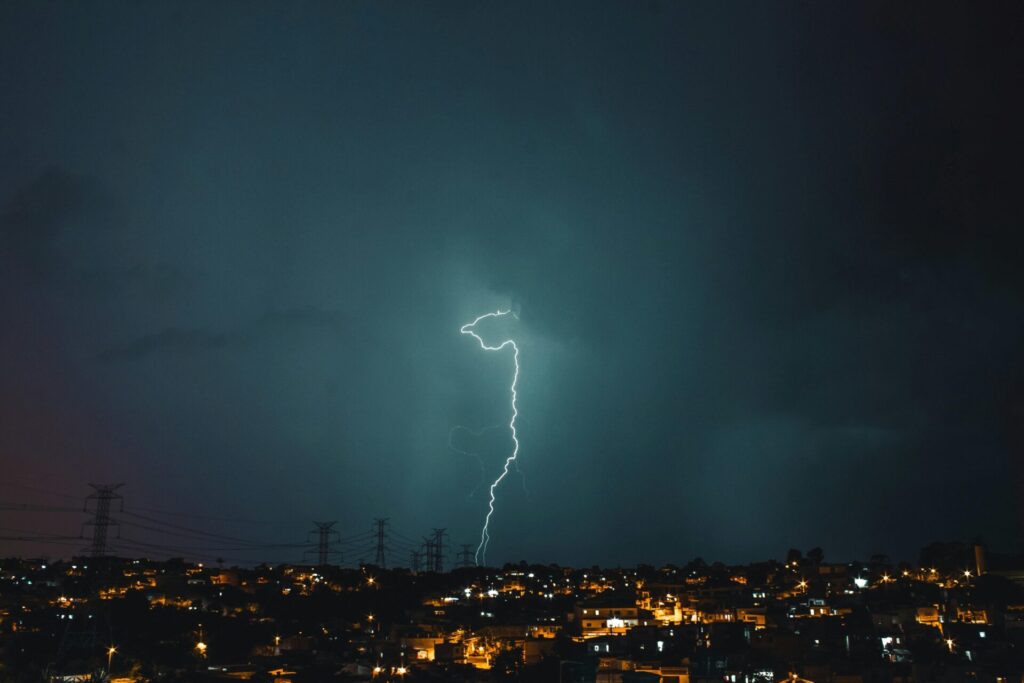
The 2026 FIFA World Cup is underway. Across eleven US host cities – from Kansas City and Houston to Miami and Dallas – tens of thousands of fans are packing into open-air venues night after night. It is the biggest sporting event ever staged on US soil, and it is happening in some of the most lightning-active regions on the planet.
That combination makes this the right moment to ask a straightforward question: what does a professional lightning detection system for sports fields actually need to do and are most venues equipped to do it?
The scale of the risk
Lightning is the most frequent weather hazard affecting outdoor athletic events in the United States. Around 45% of US lightning fatalities occur in open areas such as sports fields, and 2025 saw US lightning activity reach an eight-year high, with 252 million strikes recorded – a 20% increase on 2024.
Large stadiums compound the problem. High seating decks, tall floodlight gantries, and exposed parking areas all attract discharge. Several World Cup host stadiums sit in Texas, Florida, and the Midwest – the states with the highest annual lightning frequency in the country. Arrowhead Stadium in Kansas City is officially the loudest outdoor sports venue in the world. It is also in Missouri, which sits squarely within the US lightning belt.
The 2025 NFL season opener – Eagles vs Cowboys in Philadelphia – was delayed by lightning. An NCAA game at Ross-Ade Stadium in Indiana required a full evacuation after 1,800 lightning events were detected within 10 miles of the venue in a single session. These are not edge cases. They are recurring events at major venues, and the trend is moving in the wrong direction.
What sports field lightning detection needs to deliver
A lightning detection system for sports fields has requirements that differ from industrial or aviation applications. The key factors are speed, range, and the ability to trigger automated warnings without requiring a trained meteorologist on site at every event.
Early warning range
NCAA rules require play to be suspended when lightning is detected within 8 miles. The SEC and many other governing bodies use a 10-mile threshold. That means a detection system needs to be tracking storm activity well before it is directly overhead – not reacting to a visible flash. A 35 km (22 mile) detection radius gives event managers meaningful lead time to begin evacuation procedures before conditions become critical.
All-weather detection
A clear sky is not a guarantee of safety. Lightning can travel significant distances from its parent storm cell – a phenomenon known as a bolt from the blue. Detection systems that rely on optical sensors or simple sound monitoring can miss these events entirely. Electrostatic detection, which identifies the electrical field changes that precede and accompany all forms of lightning discharge, is significantly more reliable for professional venue use.
Automated alarm outputs
A large sports venue cannot depend on a single person watching a screen. Effective systems integrate directly with PA systems, warning horns, or illuminated signage – giving stadium operations teams the ability to set automatic alerts at defined distance thresholds, so responses are consistent and do not depend on individual judgement under pressure.
Simple installation and operation
Event venues are not research stations. A self-contained unit that can be installed without specialist infrastructure and operated by non-technical staff is far more likely to be used correctly and consistently than a complex networked system that requires ongoing configuration.
How this applies beyond the World Cup
The World Cup is the extreme end of the spectrum, but the same requirements apply across a much wider range of outdoor sports facilities – football and soccer pitches, athletics tracks, cricket grounds, rugby clubs, outdoor swimming facilities, and motorsport circuits.
Any venue with a duty of care to players, staff, or spectators in an open environment needs a defined lightning safety policy, and that policy needs to be backed by a detection system capable of triggering it in time. Relying on weather apps or the 30-30 rule (waiting until lightning is visible and counting seconds to thunder) consistently underestimates risk and shortens response windows to the point where orderly evacuation becomes difficult.
At Senseca UK, the BTD-200 Lightning Warning System was designed specifically for this market. It detects all forms of lightning out to 35 km using a quasi-electrostatic detection principle, operates as a self-contained unit with no external data feed required, and provides alarm outputs that integrate directly with PA systems, warning horns, and signage. It is currently in use at sports venues, golf courses, and outdoor leisure facilities across the world.
For golf course applications specifically, see our guide to lightning detection systems for golf courses. For a broader look at how detection technology works and how to choose the right system, the Professional Lightning Detector Buyer’s Guide covers the full range of considerations.
If you manage an outdoor sports facility and want to discuss detection and warning options, get in touch with the Senseca UK team.